Replacing Our Raac-Riddled Hospitals is Urgent – Government Must Not Allow Further Delays.
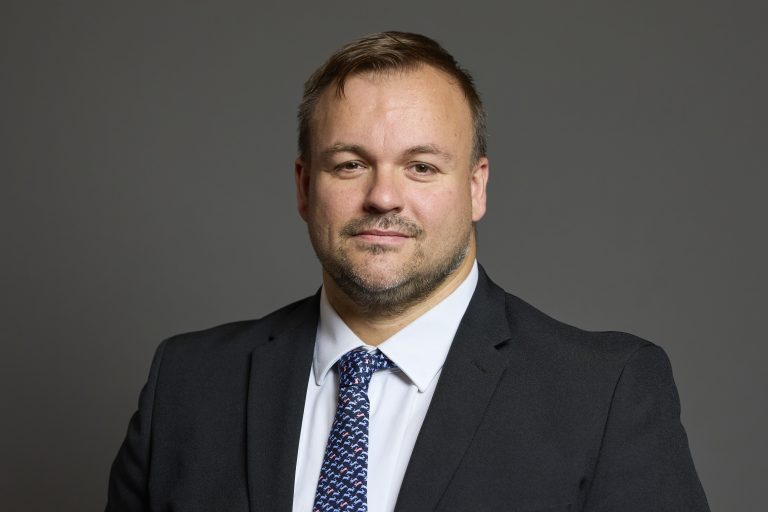
I decided to stand for Parliament in 2023, having experienced first-hand the appalling state of our NHS. A few months before my decision, my father had become unwell.
We struggled to get him a GP appointment and eventually he was admitted to hospital where it was confirmed his pneumonia was well-advanced. In hospital, he then contracted Covid and was placed in a medically induced coma, during which time he had a stroke that he never recovered from. Having spent two months in hospital, my dad died at the end of January 2023. He was aged just 65. For me, the state of our NHS is personal.
It was clear to me through this ordeal that our public services, and our NHS in particular, were broken. For too long, our collective health suffered from years of Tory austerity and a chronic lack of investment in our healthcare systems. Locally, this meant one of our hospitals in Norfolk, the Queen Elizabeth Hospital (QEH), was quite literally on the verge of collapse, held up by thousands of wooden and metal props.
Like a number of hospitals across the country, the QEH is riddled with reinforced autoclaved aerated concrete, Raac, a material that can crumble under pressure.
For years, the previous government failed to add the QEH to the New Hospitals Programme, despite the evident urgent need. The 2030 end point for the hospital edged closer, but it was only a short time before the general election that the hospital made it onto the priority list, and there was no evidence that the money was actually there to make it a reality.
The QEH has since been named as the worst-performing hospital in the country, not directly because of the presence of Raac but for a variety of other factors, such as wait times for key services. But with so much time and money spent tackling the Raac issue, there are inevitable consequences and a knock-on impact on services.
This is a deeply concerning situation, and one made even more troubling by the fact that in Norfolk we also have the worst performing ambulance trust and the almost-worst mental health trust. The cumulative impact of so many health services failing cannot be overstated.
Last year, the government announced a record £15bn of investment in the New Hospitals Programme. Locally, this will see £1.4bn invested into building a new QEH. However, the completion date has been pushed back to 2032/33, with the National Audit Office warning that this date could further slip.
I appreciate that builds of this scale are complex and lengthy but given residents and staff have been left waiting for so long, any delay to the timeline is of great concern. I have been urging the government to take whatever measures possible to speed up the process. While the impact on patient care and staff morale is obvious, it should be noted that it is also costing millions of pounds to keep Raac hospitals functioning while the longer-term rebuilds progress.
We simply cannot expect our NHS to deliver first-class services if our hospital buildings are literally falling down around us.
The delivery of a new QEH and the New Hospitals Programme more widely gets to the very heart of what good government should do. Investing in our infrastructure. Supporting our services. Making lives better.
We will all have moments in our lives when we are the patients or at the bedside of those we love. Ensuring we build an NHS that is modern, that provides world-leading care, that sees an end to the rural and urban healthcare divide, so there is no difference in the care you receive – I believe that is what the Labour government is doing, but after so many years of neglect, we must achieve that change as quickly as we possibly can.